
What is an eSIM?
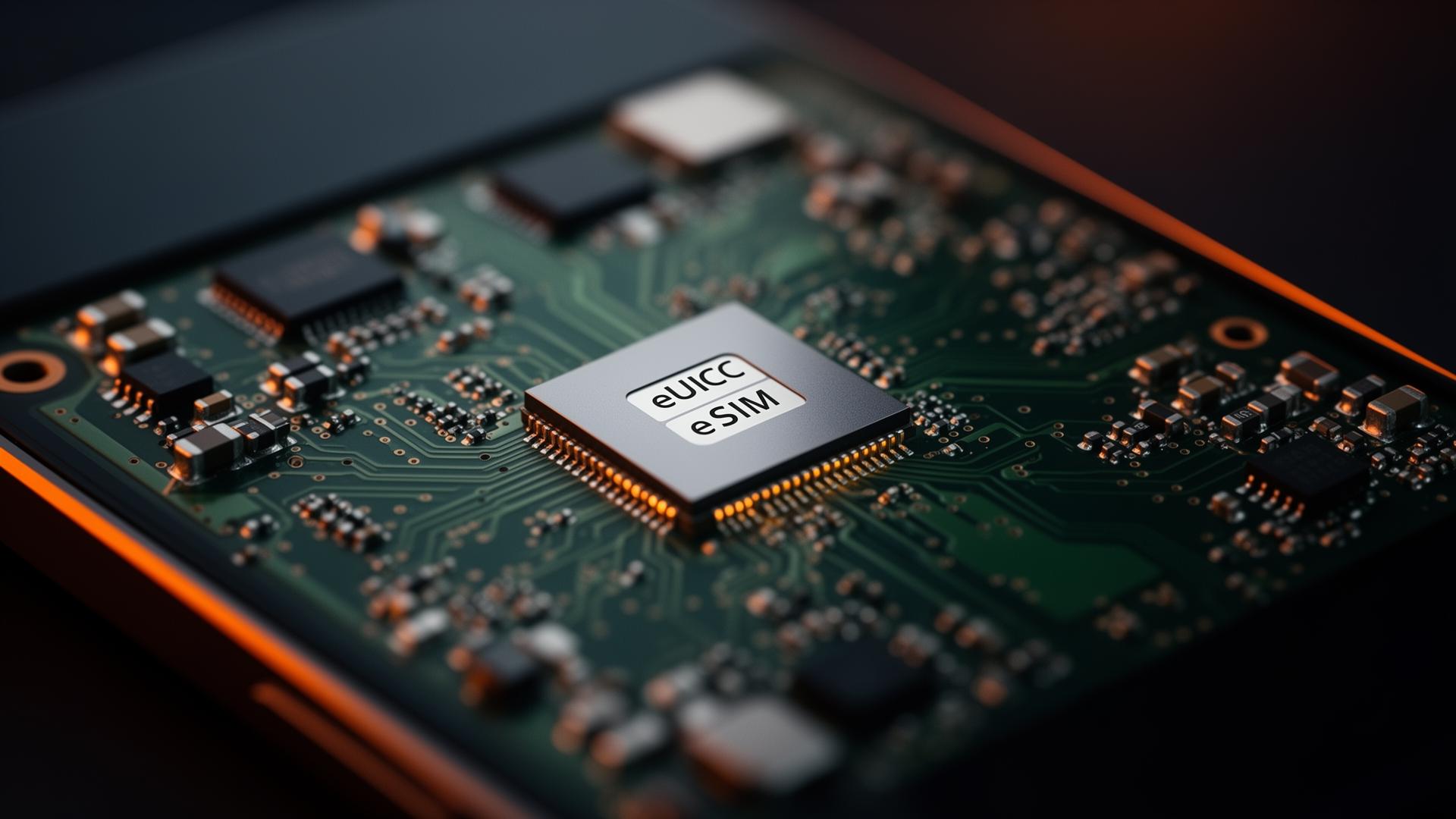
An eSIM (embedded SIM) is a small chip built directly into your phone, tablet, smartwatch, or laptop that does everything a plastic SIM card does — without the plastic. Instead of swapping cards, you download a digital SIM profile from your carrier in seconds. eSIMs are the global GSMA standard and are supported by every major mobile network and modern device.
The eSIM market in numbers
smartphones shipped will be eSIM-capable by 2030
Source: GSMA Intelligence ↗
projected global eSIM market size by 2030
Source: Grand View Research ↗
eSIM smartphone connections forecast worldwide by 2030
Source: Counterpoint Research ↗
of travellers say roaming costs influence their carrier choice
Source: Kaleido Intelligence ↗
How does an eSIM work?
Inside every eSIM-capable device is a tamper-resistant chip called the eUICC (embedded Universal Integrated Circuit Card). When you buy a mobile plan, your carrier issues an activation code. Your phone downloads the carrier profile over Wi-Fi or existing mobile data and saves it to the eUICC. From there, your device authenticates with the mobile network exactly the same way a physical SIM would.
The entire process is governed by the GSMA SGP.22 Remote SIM Provisioning specification, the same global standard every Tier-1 carrier and device manufacturer follows. You can store multiple profiles on a single eSIM and switch between them in your phone's settings — that's why a single iPhone can hold a US carrier, a Japan travel plan, and a UK business line all at once.
eSIM vs Physical SIM
| Feature | eSIM | Physical SIM |
|---|---|---|
| Activation | Instant, digital | Requires card delivery |
| Multiple plans | Yes, switch any time | Only one per slot |
| Lost or stolen | Cannot be removed | Can be lost or swapped |
| Travel use | Buy & install in minutes | Find a store on arrival |
| Environmental impact | No plastic waste | Plastic + packaging |
| Device support | iPhone XS+, Pixel 3+, S20+ | Almost every phone |
Why eSIMs matter for travel
For travellers, eSIMs solve the connectivity problem without the airport SIM hunt or the roaming bill shock. According to a Kaleido Intelligence roaming survey, nearly three quarters of international travellers actively look for alternatives to traditional roaming — and travel eSIMs are now the dominant option. You can buy a plan from your living room, install it before you fly, and arrive online.
For travel businesses — OTAs, airlines, DMCs, and tour operators — eSIMs are now an embedded layer of the booking flow. Providers like Journey Stack give travel companies a white-label eSIM platform with one-click activation, WhatsApp top-ups, and a full API to bundle data into every trip.
Useful next steps
- → Check if your device supports eSIM
- → Step-by-step eSIM installation guide (iPhone, Samsung, Pixel)
- → Browse 50+ eSIM questions and answers
- → Read the full eSIM technology guide
Frequently asked questions
What is an eSIM?
An eSIM (embedded SIM) is a small chip built directly into your phone, tablet, smartwatch, or laptop that performs the same function as a traditional plastic SIM card. Instead of inserting a physical card, you download a digital SIM profile from your carrier, usually by scanning a QR code or tapping a one-click activation link. eSIMs follow the global GSMA standard and are supported by all major mobile networks worldwide.
How does an eSIM work?
An eSIM works by storing a carrier profile in a secure chip (the eUICC) inside your device. When you buy a plan, the carrier sends you an activation code. Your device downloads the profile over Wi-Fi or mobile data and then connects to the network exactly like a physical SIM. You can store multiple eSIM profiles and switch between them in your phone's settings without swapping cards.
What is the difference between an eSIM and a physical SIM?
A physical SIM is a removable plastic card you insert into a SIM tray. An eSIM is a chip soldered into the device that you activate digitally. eSIMs are faster to set up, can hold multiple profiles at once, cannot be lost or stolen, and work for instant remote activation, which is why they are the standard for international travel.
Which devices support eSIM?
Most modern smartphones support eSIM, including iPhone XS and newer (iPhone 14 and later in the US are eSIM-only), Google Pixel 3 and newer, Samsung Galaxy S20 and newer, recent iPads, Apple Watches, and many laptops and smartwatches. You can check your device on the Journey Stack compatible devices list.
Do I need Wi-Fi to install an eSIM?
Yes. You need an internet connection (Wi-Fi or your existing mobile data) to download the eSIM profile to your device. Once installed, the eSIM connects to the local mobile network on its own and no Wi-Fi is needed to use it.
Can I use an eSIM and a physical SIM at the same time?
Yes. Most eSIM-capable phones support Dual SIM, meaning you can keep your physical SIM active for calls and texts on your home number while using an eSIM for travel data. This avoids roaming fees without losing your usual number.
Is an eSIM safe?
eSIMs are at least as secure as physical SIMs, and in many cases safer. Profiles are stored in a tamper-resistant secure element, are encrypted in transit, and cannot be physically removed or cloned by someone holding your device. They follow the GSMA Remote SIM Provisioning standard used by the entire mobile industry.
Why is eSIM popular for international travel?
Travel eSIMs let you buy and activate a local or regional data plan in seconds, often before you even board your flight. There's no airport SIM card hunt, no roaming bill surprise, and you can keep your home number active. Travel businesses like OTAs, airlines, and DMCs increasingly bundle eSIMs into bookings via providers such as Journey Stack to remove the connectivity friction from travel.
How do I install an eSIM on my phone?
Three common methods: 1) One-click activation, where you tap a link sent by your provider and the profile installs automatically; 2) QR code, where you scan the code from Settings > Mobile/Cellular > Add eSIM; 3) Manual entry, where you type the SM-DP+ address and activation code. Step-by-step screenshots for iPhone, Samsung, and Pixel are in our installation guide.
Can I transfer my eSIM to a new phone?
Yes, but it depends on the carrier. Apple supports direct eSIM transfer between iPhones using Quick Transfer. For most travel eSIMs, you simply contact the provider or use the self-serve portal to reissue the profile to your new device. Always check the provider's transfer policy before switching phones.
Building eSIMs into your travel product?
Journey Stack powers OTAs, airlines, and travel agencies with white-label eSIM infrastructure, APIs, and one-click activation in 200+ countries.
Book a call